Battery health · Warning signs · Prevention
7 Signs Your Battery Is Dying
12 May 2026
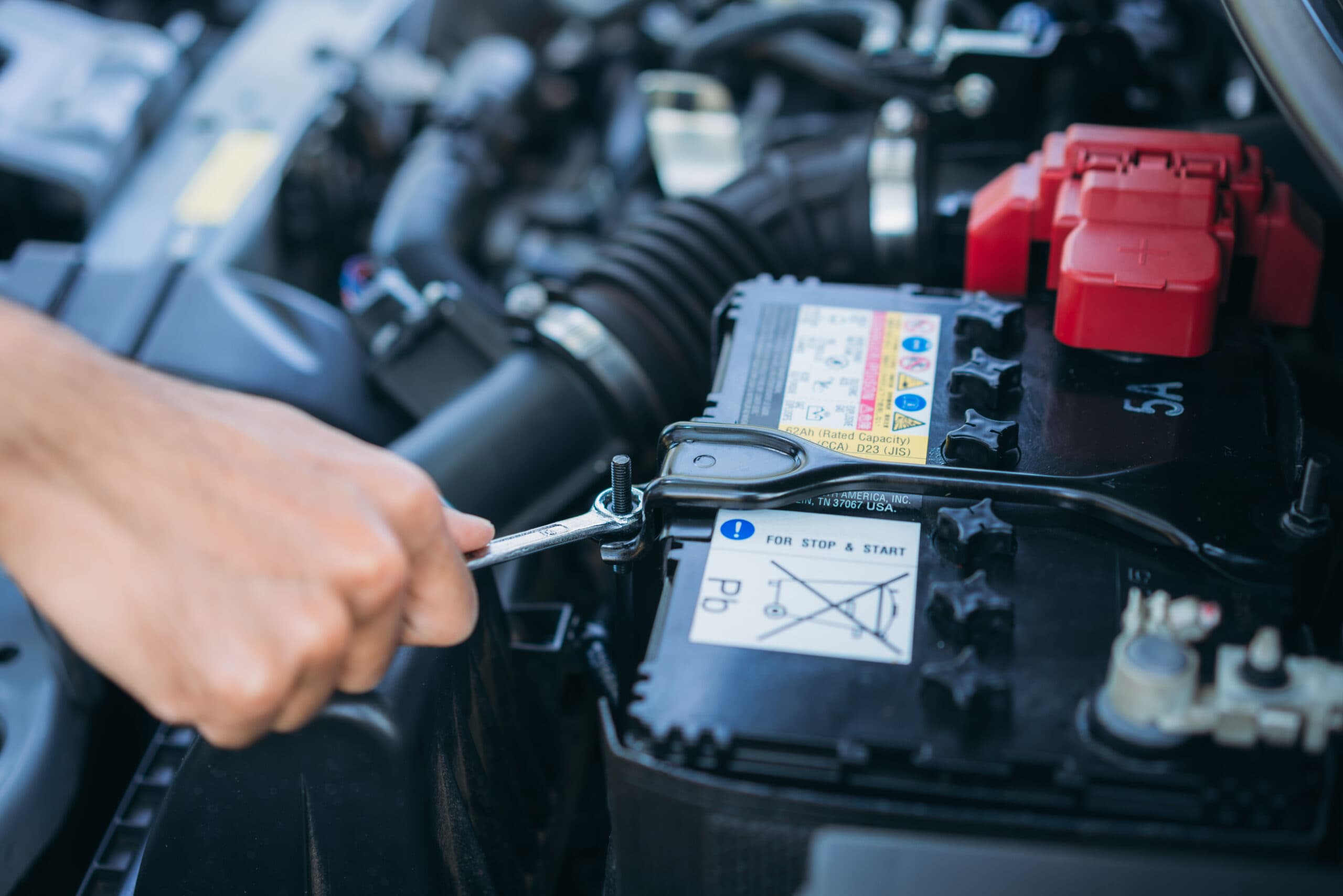
Extreme heat is the number one killer of car batteries in the UAE — far more than cold ever is in other countries. The same summer temperatures that push your AC to its limit also accelerate the chemical reactions inside your battery, shortening its working life to as little as 18–24 months in many vehicles.
Most batteries don't fail without warning. They give off small signs for days or weeks before they finally die — usually at the worst possible moment. Here's what to look out for.
1. Slow or sluggish engine crank
If your engine takes a noticeably longer moment to turn over before starting, your battery is struggling to deliver enough current. This is often the earliest and most reliable warning sign.
2. Dashboard battery warning light
A lit battery icon on your dashboard usually points to a charging system issue — which could be the battery itself or the alternator. Either way, it shouldn't be ignored.
3. Dim headlights and interior lights
Headlights or interior lights that seem dimmer than usual, especially when idling, often mean the battery can no longer hold a full charge.
4. A swollen or bulging battery case
Heat causes the internal gases in a failing battery to expand, which can visibly swell or warp the casing. A swollen battery should be replaced immediately — it's a safety risk, not just a performance one.
5. Corrosion around the terminals
A white, ashy buildup around the battery terminals is a sign of leaking battery acid or a weakening internal seal, both common after a couple of summers in Dubai's heat.
6. Your battery is 2+ years old
Even with no visible symptoms, most batteries in the UAE climate are due for replacement by the two-year mark. If you don't remember the last time it was changed, it's worth checking.
7. Electronics behaving oddly
Power windows moving slower than normal, a clock that resets itself, or a radio that cuts out briefly on startup can all point to a battery that's no longer holding a stable charge.
How to check your battery at home
Start with its age. Most batteries have a date stamped on the case or a sticker showing when they were fitted; in the UAE, anything past two years deserves a test. If you have a multimeter, measure across the terminals after the car has been parked for a few hours: a healthy, fully charged battery reads about 12.6 volts, 12.4 volts means it's around three-quarters charged, and anything below 12.2 volts means it's well down. A battery that drops back to a low reading even after a long drive is failing, not just flat.
Signs that need action straight away
A swollen case, a rotten-egg smell or a leaking battery aren't signs to keep an eye on; they need dealing with now. A swollen or leaking battery can release corrosive acid and flammable gas, so don't try to jumpstart it. Keep sparks and flames away from it and have it replaced.
Why batteries give up on the hottest days
Heat does its damage slowly, all summer, but the failure usually comes at the moment of highest demand: starting a car that has stood in the sun all afternoon, with the AC about to run at full power. A battery that coped in April can have too little in reserve by August. That's why a weak start in spring is worth acting on, before the summer finishes the job.
Battery, alternator or starter?
Not every no-start is the battery. If the car starts after a jumpstart and runs normally, the battery is the likely cause. If it dies again within minutes, the alternator probably isn't charging it. A single loud click with no crank often points to the starter motor. A quick test of the battery and charging system tells them apart before you pay for parts you don't need.
What to do when you notice a sign
Don't wait for the battery to fail completely. Avoid short trips where you can, and keep electronics off while the engine isn't running. Don't keep turning the key if the engine cranks slowly: each attempt drains what's left and strains the starter. Book a test at home or at work instead. It takes a few minutes, and if the battery is failing you can replace it on your schedule rather than at the roadside.
What happens when you call us
A technician comes to the car, wherever it's parked, and tests the battery and the charging system. If the battery only needs charging, you'll be told so. If it's failing, we fit a replacement of the right size and type for your car on the spot, take the old battery away and hand over the warranty documents. In most cases the whole job takes 15 to 30 minutes after arrival.
Need car battery replacement in Dubai, Sharjah & Ajman?
Our technicians are available 24/7, anywhere in Dubai, Sharjah & Ajman, with a 30-minute* average response time.